Course DetailsHome / Courses Details
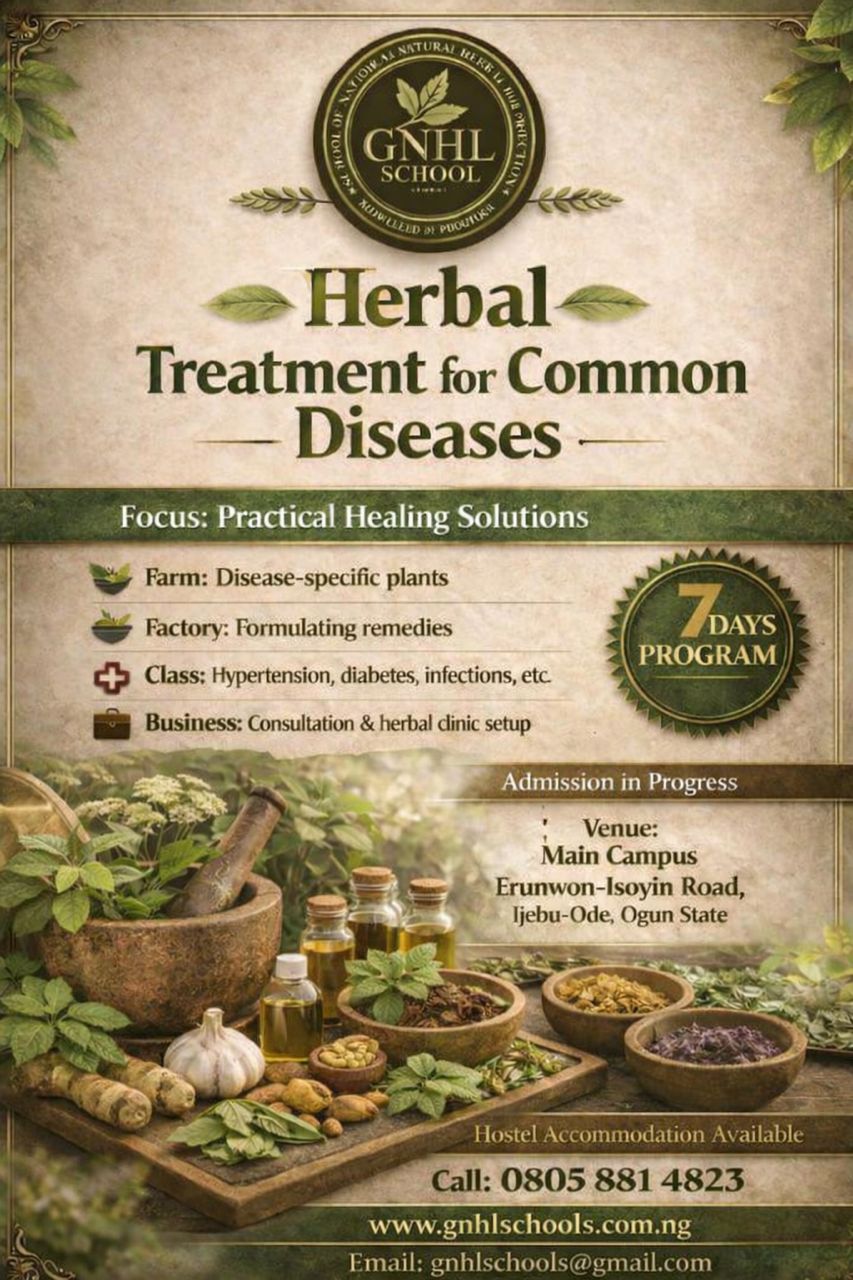
Herbal Treatment for Common Diseases (Short Course)
This intensive short course is designed for individuals interested in learning how to use nature’s pharmacy to manage everyday health challenges safely and effectively. The program focuses on the practical application of medicinal plants for common ailments, bridging the gap between traditional wisdom and modern safety standards.
-
Introduction to Phytotherapy (Herbal Medicine).
-
Quality Control: How to select and clean raw materials.
-
Safety First: Understanding herb-drug interactions and toxicity.
-
Module B: Managing Common Ailments
-
Fever & Infections: Natural approaches to managing symptoms of Malaria and Typhoid.
-
Respiratory Health: Herbs for coughs, catarrh, and congestion.
-
Digestive Wellness: Remedies for indigestion, bloating, and constipation.
-
Skin & External Care: Natural treatments for rashes, fungal infections, and minor wounds.
-
Practical Preparation
-
Hands-on workshop: Preparing a "Home First-Aid" herbal kit.
-
Proper storage techniques to maintain potency.
1. Foundational Understanding of Herbal Production:
- Basic Herbal Knowledge: A grasp of the general principles of herbal product manufacturing, including sourcing, processing, and common product types.
- Awareness of Herbal Product Risks: Understanding that herbal products can have safety risks, including contamination and potency variations.
- Appreciation for Consumer Safety: Recognition of the importance of ensuring the safety and efficacy of herbal products for consumer health.
2. Core Concepts of Quality Control:
- Understanding of Quality Control Principles: Familiarity with the basic concepts of quality control, including accuracy, consistency, and safety.
- Interest in Manufacturing Processes: A general understanding of manufacturing processes and how quality control systems are integrated.
- Awareness of Contamination Risks: Recognizing that contaminants like microbes, heavy metals, and pesticides are a risk to herbal products.
3. Understanding of Regulatory Compliance:
- Awareness of Regulatory Bodies: Basic knowledge of regulatory bodies like NAFDAC, WHO, and the FDA.
- Understanding of GMP: Familiarity with the concept of Good Manufacturing Practices and their importance.
- Appreciation for Documentation: Understanding the importance of accurate record-keeping and documentation in regulatory compliance.
4. Core Skills and Interests:
- Attention to Detail: The ability to follow procedures and maintain accurate records.
- Analytical Thinking: The capacity to analyze data and identify potential quality issues.
- Problem-Solving Skills: The ability to develop solutions to quality control and compliance challenges.
- Interest in Regulatory Requirements: A willingness to learn and understand regulatory guidelines.
- Ethical Mindset: A commitment to ethical practices in herbal production and quality assurance.
5. Willingness to Engage and Learn:
- Interest in Testing Methods: A willingness to learn about various testing methods, including microbial testing and chemical analysis.
- Commitment to Safety: A strong commitment to ensuring the safety of herbal products.
- Teamwork and Communication: The ability to work effectively in teams and communicate quality-related information.
- Project Management Skills: A willingness to participate in a final project involving the creation of a quality control and compliance plan.
Available on student portal